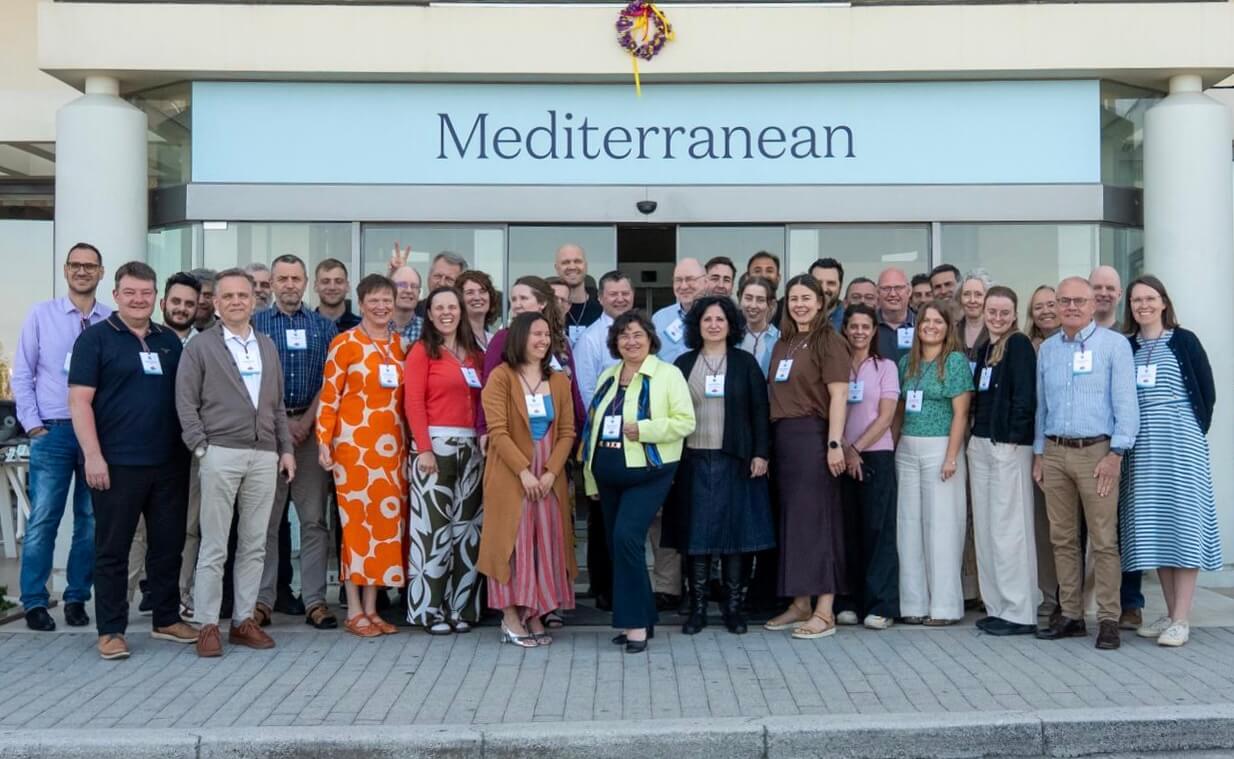
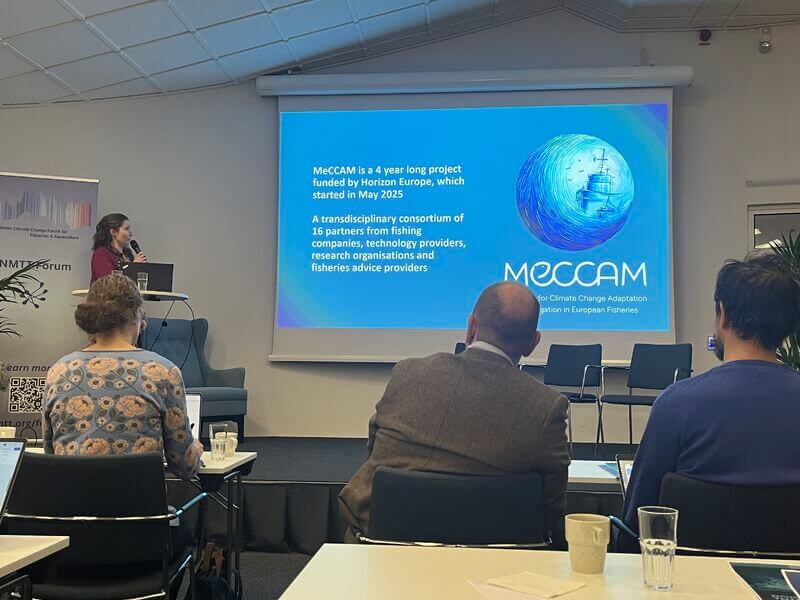
Two strands of work were at the centre of discussions:
- Assessing climate change impacts on fish stocks – led by The Lyell Centre for Earth and Marine Sciences at Heriot-Watt University.
- Developing, testing, and implementing adaptation and mitigation solutions for fisheries – led by the Institute of Marine Research – CSIC (Spanish Research Council) and Nofima.
Together, these research areas aim to provide a robust evidence base while supporting the fisheries sector in navigating the challenges of climate change.
Fresh Perspectives from External Experts
Several invited speakers contributed valuable insights from outside the consortium:
- Angus Garrett (Seafish): adapting the UK seafood sector to climate change, including the development of a new carbon emissions profiling tool.
- Magnus Johnson (University of Hull): presenting MyBoatData, an app designed to help fishers cut fuel use.
- Steven Mackinson (Scottish Pelagic Fishermen’s Association): highlighting opportunities to boost sustainability in Scotland’s seafood sector while strengthening consumer engagement.
In addition, project partners held constructive discussions with Angus Campbell and Grant Fulton on the potential for establishing an artisan Bluefin Tuna fishery on Scotland’s west coast. While such a development could deliver strong incomes for fishers, high upfront costs and quota uncertainties remain important barriers.
Innovation Spotlight: Smartrawl System
The meeting also featured a presentation from The Lyell Centre’s Rosie Ashworth, Paul Fernandes, and Joshua Lawrence on the Smartrawl system. This innovative technology, designed to reduce bycatch and discards, will soon be tested in the North Sea case study.
Looking Ahead
The Edinburgh meeting showcased both the progress already achieved and the promising initiatives now underway. By combining scientific expertise, practical tools, and stakeholder engagement, MeCCAM continues to work toward more resilient and sustainable fisheries in Europe.